


Keratin Treatment Aftercare in Dubai's Hard Water
How to care for hair after a keratin treatment in the UAE: the first 72 hours, the right shampoo, and what Dubai's hard, chlorinated water does to it.

Back view of a woman's smooth hair with a blu Ionic Shower Head with Built-in Shower Filter handheld to her right
The short version: wait whatever period your stylist gives you before the first wash, then wash in lukewarm water with a shampoo free of both sulfates and sodium chloride, and wash less often than you used to.
In the UAE there is a fourth variable most aftercare guides skip — the water. Dubai's supply is desalinated, hard and chlorinated, and it meets your freshly smoothed hair every day for months. Here is what the treatment is doing, what the first two weeks should look like, and which part of the problem a shower filter solves.
- Wait the number of days your stylist gives you. Cleveland Clinic's general guidance is a few days; formulas differ.
- Sulfate-free is only half of it. Sodium chloride — plain salt, a common thickener — is the one people miss.
- Hard water leaves measurably more minerals on hair: 0.804% calcium versus 0.26% in one comparison. That film is the opposite of what you paid for.
- Chlorine is an oxidising agent that roughens the cuticle. A certified filter reduces it; it does not soften the water.
- Nobody, blu included, can tell you a filter buys a set number of extra weeks. No study measures that.
What you are actually protecting
A keratin or smoothing treatment is a surface treatment sealed in with heat, not a permanent structural change — which is exactly why aftercare decides how long it lasts.
The formula is worked through the hair and sealed with a flat iron at high heat, leaving the cuticle flatter and the strand smoother. It fades gradually rather than growing out in a hard line. Cleveland Clinic puts the result at about six months if you do not wash too frequently; salons commonly quote three to six.
So aftercare comes down to one question: what strips a surface treatment off a hair fibre? Four things — harsh detergents, salt, heat and oxidation.
A note on the formaldehyde question
Worth knowing before your next appointment rather than after. The US Food and Drug Administration has flagged that some hair-smoothing products release formaldehyde as a gas when heated, which is why a poorly ventilated salon can leave you with stinging eyes, a sore throat or coughing. A rule to prohibit formaldehyde-releasing ingredients has been on the FDA's agenda since 2023; it missed its latest deadline at the end of 2025 and the proposed rule still has not been published. Cleveland Clinic notes open questions about links to cancer.
That is not a reason to panic about a treatment you have already had. It is a reason to ask your salon what is in the formula and how the room is ventilated — and to see a doctor if a treatment left you with symptoms.
The first 72 hours: do nothing, carefully
This is the window people get wrong, and the cheapest one to get right.
- Do not wash it. Cleveland Clinic's guidance is a few days — typically about three — but formulas differ. Your stylist's number is the one that counts; ask before you leave the chair.
- Do not put a crease in it. No ponytails, clips, sunglasses pushed up on your head or tucking behind your ears. A bend set now can stay visible.
- Do not sleep on damp hair, and skip the gym if you can. Heavy sweating counts as getting it wet.
- Stay out of the pool and the sea. Chlorinated and salt water are both hard on a smoothing treatment, and this is when it is most vulnerable.
The first wash, and every wash after it
- Lukewarm, not hot. Heat lifts the cuticle. Dubai's cold tap running warm in August makes this harder than it sounds, but the cooler you can stand it, the better it holds.
- Sulfate-free and sodium-chloride-free. The second half catches people out: salt is a common thickener, and Cleveland Clinic specifically recommends sodium-chloride-free products after a keratin treatment. Read the ingredient list, not the front of the bottle.
- Shampoo the scalp, condition the lengths. Buildup is a scalp problem; dryness is an ends problem.
- Wash less often. Every wash costs a little. Two to three times a week is the usual advice, with dry shampoo covering the gap.
- Blot, do not rub. Microfibre or a cotton t-shirt; terry loops catch on lifted cuticle.
More on the first wash: What to expect after your first wash.
Where UAE water comes into it
Everything above is standard aftercare and applies in London or Manila. What is different here is the water doing the washing.
Dubai's tap water starts as seawater, is desalinated, disinfected and remineralised, and arrives at your shower hard and carrying residual chlorine — deliberately, because that residual keeps the supply safe. It is safe water. It is simply not designed with your hair cuticle in mind. The full picture is in Why Dubai's water is so hard on your hair and skin.
Hardness: the film that builds up
Hard water leaves minerals behind on hair, and it has been measured. Matched samples washed in hard water (212.5 ppm as calcium carbonate) versus distilled water over 30 days showed mean calcium deposition of 0.804% against 0.26%, and magnesium of 0.34% against 0.078%. Under an electron microscope the hard-water samples looked ruffled and measured thinner.
On smoothed hair, that film is what you paid to avoid: it dulls shine, adds weight and roughness, and stops shampoo lathering, so you use more product and leave more residue behind. Danby and colleagues showed the same binding effect on skin — washing with sodium lauryl sulfate in hard water left significantly more surfactant behind, and ion exchange mitigated it.
To be straight about the limits: an earlier study using the same protocol found no significant difference in tensile strength or elasticity; a later one using harder water did find a significant strength loss. Minerals demonstrably build up. Whether that weakens the fibre is contested.
Chlorine: the oxidising half
Chlorine is an oxidising agent. It strips the sebum that keeps a fibre pliable and roughens the cuticle, and a hot shower amplifies both. Unlike a pool, a shower happens every day. On skin, Seki and colleagues found free residual chlorine in bathing water reduced the water-holding capacity of the stratum corneum at concentrations as low as 0.5 mg/L — the same order of daily exposure your hair gets.
What a shower filter does — and does not
What it does not do. A shower filter does not soften water. It does not reduce calcium or magnesium — that needs ion exchange, either a plumbed-in softener or blu's separate NXT LVL Shower Softener & Filter, which uses Seplite ion-exchange resin. Any filter advertised as "softening" is describing something it cannot do. Nor is it a substitute for sulfate-free, salt-free shampoo, or for your stylist's instructions.
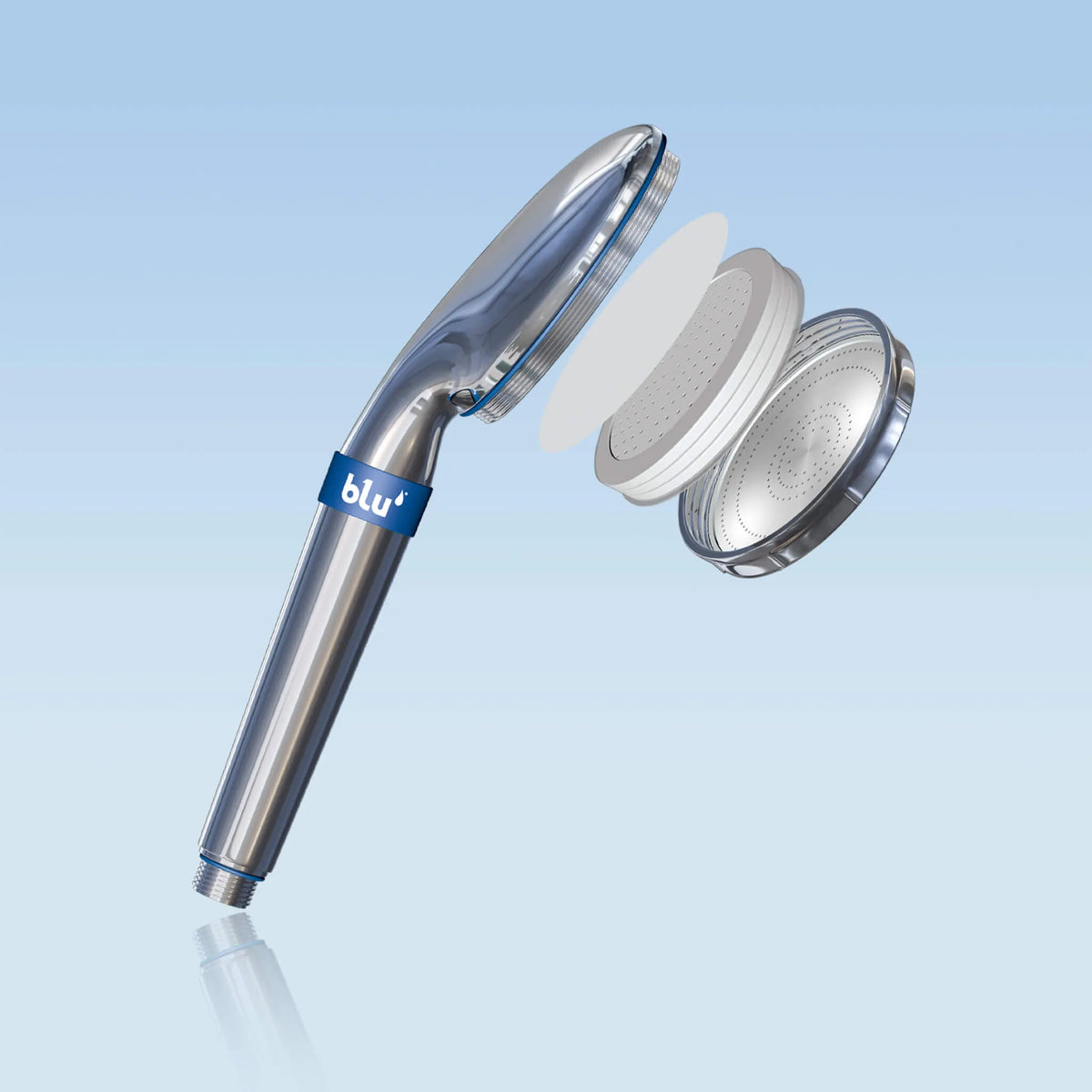
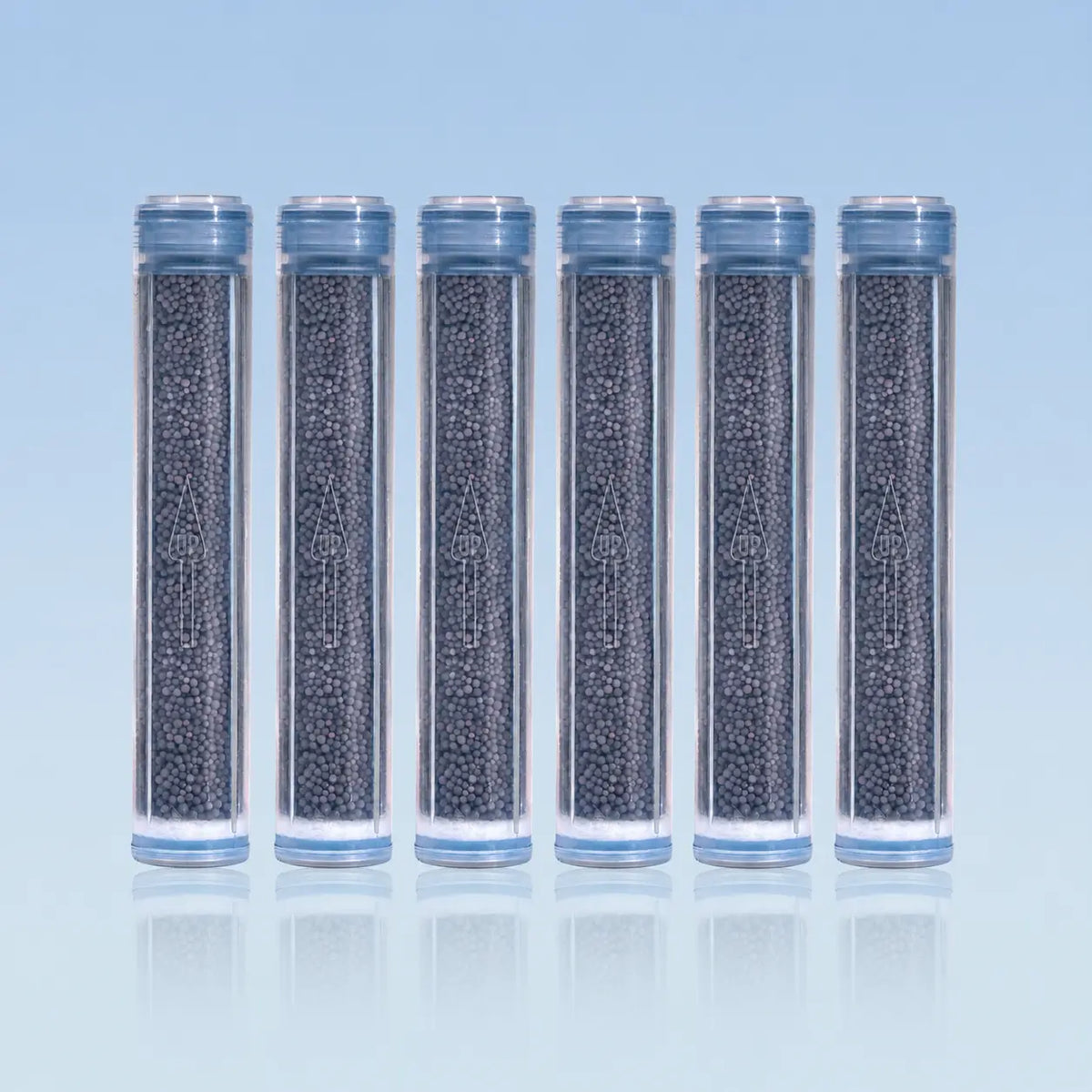
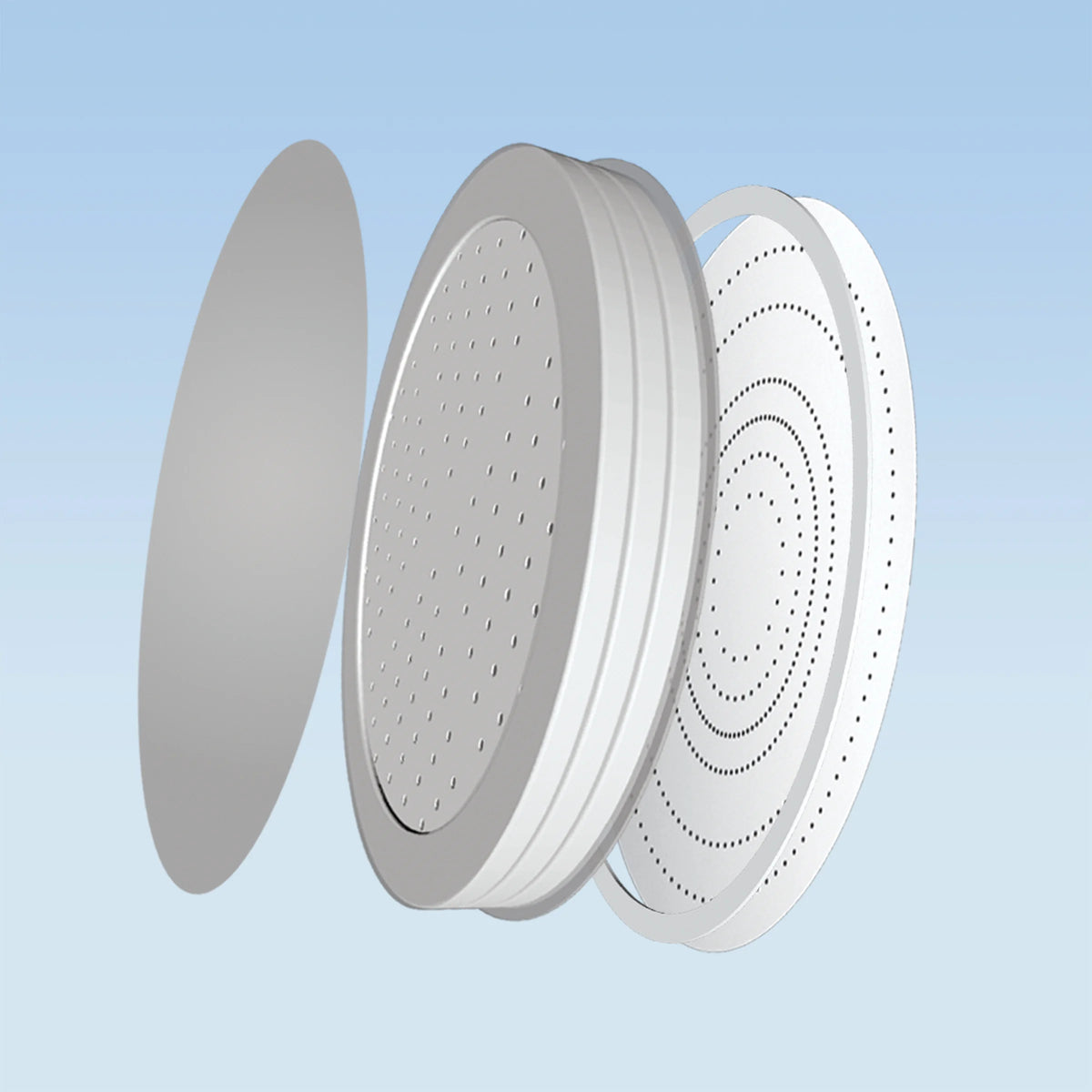
What it does do is address the oxidising half. blu's Ionic Shower Head with Built-in Shower Filter is built on an NSF/ANSI 42 component-certified filtration medium — the standard covering chlorine, taste and odour — and reduces chlorine, dirt and odours in the water passing through it; it is also designed to reduce heavy metal ions. In Eurofins laboratory testing of the handheld filter with NMC cartridge, free chlorine fell from 17.09 mg/L to 0.09 mg/L, a 99.5% reduction. Details on The Science.
| What strips a smoothing treatment | Why | What addresses it |
|---|---|---|
| Sulfates | Lift and strip the sealed cuticle | Sulfate-free shampoo |
| Sodium chloride | Common thickener; breaks the treatment down | Read the ingredient list, not the label |
| Heat | Lifts the cuticle | Lukewarm water; less styling heat |
| Chlorine | Oxidises keratin, roughens the cuticle | A certified shower filter |
| Hardness minerals | Film, dullness, poor lather, more residue | Chelating wash; ion exchange. Not a filter. |
| Wash frequency | Every wash costs a little | Two to three washes a week |
One thing we will not tell you: that a filter buys a set number of extra weeks of smoothness. No study we know of measures that, and nobody selling you a filter — ourselves included — can honestly put a number on it. What is documented is that chlorine oxidises hair and hard water deposits minerals on it. Taking one of the two out of your daily shower is reasonable; calling it a guarantee would not be.
Frequently asked questions
How long should I wait before washing my hair after a keratin treatment?
Follow the number your stylist gives you; it depends on the formula. Cleveland Clinic's general guidance is a few days — typically about three — though some newer formulations allow washing sooner. When in doubt, wait longer.
Does hard water ruin a keratin treatment?
"Ruin" is too strong. Hair washed in hard water carries three to four times more calcium and magnesium, and that film dulls hair, adds roughness and stops shampoo lathering. The opposite of what you bought — but gradual, not a single ruinous event.
Will a shower filter make my keratin treatment last longer?
We cannot honestly promise that; we know of no study measuring it. What a certified filter does is reduce chlorine and other water pollutants in every wash, and chlorine oxidises keratin and roughens the cuticle. It takes one documented stressor out of the routine. It does not soften the water, and it does not replace sulfate-free, salt-free shampoo.
Do I still need a sulfate-free shampoo if I have a shower filter?
Yes. They address different things. A filter acts on what comes out of the shower head; shampoo is what you rub into your hair. Sulfates and sodium chloride strip a smoothing treatment regardless of how clean the water is.
Can I swim after a keratin treatment?
After the waiting period, yes — but chlorinated pool water and salt water are both hard on a smoothing treatment. Wet your hair with clean water and apply a leave-in first, wear a cap if you swim regularly, and rinse thoroughly afterwards. In the first few days, stay out entirely.
Sources
- Cleveland Clinic — Keratin Treatments: duration, first-wash timing, sodium-chloride-free products.
- US FDA — Hair Smoothing Products That Release Formaldehyde When Heated.
- CNN, January 2026 — FDA misses its deadline on the proposed ban.
- Srinivasan & Rangachari, SEM of hair treated in hard water, Int J Dermatol, 2016;55(6):e344–6.
- Srinivasan et al., Effects of hard water on hair, Int J Trichology, 2013;5(3):137–9.
- Luqman et al., Baseline strength of hairs treated with deionized and hard water, Int J Trichology, 2018;10(3):113–7.
- Danby et al., The Effect of Water Hardness on Surfactant Deposition after Washing, J Invest Dermatol, 2018;138(1):68–77.
- Seki et al., Free residual chlorine in bathing water and the stratum corneum, J Dermatol, 2003;30(3):196–202.
- blu, The Science — the NSF/ANSI 42 component-certified medium and Eurofins test reports.
- Eurofins, Chlorine reduction test report EFSN24031276 — handheld filter with NMC cartridge, April 2024.
General information about hair care and water quality, not medical advice. If you have significant hair loss, a persistent scalp condition or a reaction to a salon treatment, see a doctor.


Leave a comment